Valine: More Than Just an Amino Acid
Historical Development
The journey of valine traces back to the early twentieth century, at a time when unlocking the mysteries of proteins started to look possible for chemists. Scientists of that era had only begun to appreciate that proteins aren’t just blobs—they’re built from a precise set of building blocks, called amino acids. Valine, with its distinctive branched structure, quickly stood out among its peers. After its discovery in 1901, research on valine gathered momentum, as labs pieced together how our bodies use it. The 1950s saw biochemistry blossom into a full-fledged science, powered by advances in chromatography and protein sequencing. As a branched-chain amino acid, valine joined leucine and isoleucine as critical elements in muscle metabolism, breaking into textbooks and medical protocols. Even now, decades later, valine keeps popping up in places ranging from sports medicine to industrial fermentation, reflecting its wide-reaching influence.
Product Overview
Valine stands apart as more than a simple dietary ingredient. Those in agriculture, pharmaceuticals, and sports supplementation have all found ways to tap into its power. Due to its role as an essential amino acid, humans can’t synthesize it, making external supply a non-negotiable. Beyond tablets, capsules, and powders, valine runs through bulk animal feed, parenteral nutrition formulas, and specialty amino acid blends. The marketplace treats valine like a staple, not a boutique ingredient, with manufacturers producing it on an industrial scale through fermentation. This status tells a bigger story—valine affects health, metabolic control, and recovery, with a reputation built over decades of scientific use and real-world results.
Physical & Chemical Properties
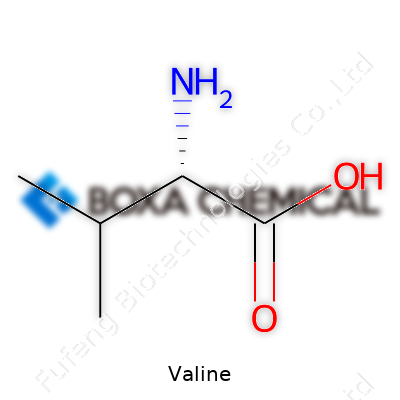
With a white crystalline appearance and a slightly bitter taste, valine signals its purity using looks alone. Chemically speaking, its formula—C5H11NO2—makes it clear why the body covets it. The amino group and carboxylic acid group allow valine to link into peptide chains, while the isopropyl side chain sets it apart from sleeker amino acids. This side group doesn’t just add bulk; it carries hydrophobic tendencies, driving valine to cluster with similar residues inside folded proteins. Valine’s melting point lands near 315°C, speaking to its stability under typical laboratory conditions. Soluble in water, valine takes the lead in high-turnover metabolic reactions, moving between free and bound states easily.
Technical Specifications & Labeling
Buying or selling valine today means paying attention to technical parameters—from purity, residue levels, and moisture to specific manufacturing standards. Food and pharmaceutical grades often demand over 98% purity, and testing uses methods like HPLC and polarimetry to keep results honest. Names appear on packaging in multiple languages, reflecting its circulation in global trade. On supplements and animal feeds, labels call out valine content and source, sometimes indicating whether it comes from plant fermentation or another route. Precise dosing matters, especially where dietary fortification or medical use come into play.
Preparation Method
In the early years, scientists would painstakingly isolate valine from protein hydrolysates. Modern practice has moved far from such inefficient methods. Instead, large tanks buzz with activity as bacteria like Corynebacterium glutamicum churn out valine from sugars. With genetic tweaks, fermentation moves fast and yields top grades of the amino acid, often in powder or granular form. Once fermentation ends, producers separate the valine from microbial biomass and purify it through crystallization or ion-exchange columns. Downstream processing removes byproducts, delivering a consistent finished ingredient that meets specifications for human or animal consumption.
Chemical Reactions & Modifications
Valine, as simple as it looks, opens up an array of reactions in the hands of a skilled chemist. Biologists edit its side groups to produce analogues for research, especially in the study of protein folding and misfolding. Chemical modifications often revolve around the amino or carboxyl groups, enabling the creation of peptides, labeled tracers, or derivatives suitable for targeted delivery in therapies. In vivo, enzymes transfer phosphate, methyl, or even glucose groups to valine-containing peptides, fine-tuning their activity in metabolic pathways. Understanding these modifications helps develop better drugs, protein therapeutics, and nutritional formulas.
Synonyms & Product Names
Walk down the aisles of supplement shops or browse industrial catalogs, and valine pops up under a range of names—L-valine, DL-valine, 2-amino-3-methylbutanoic acid, or just as a “branched-chain amino acid” component. Some brands push muscle-centric formulas where valine sits as part of “BCAA” blends, while feed companies market valine-enriched mixes for swine and poultry. These synonyms sometimes confuse new buyers, but to those informed, they all mean the same critical nutrient.
Safety & Operational Standards
Safety with valine comes down to adherence to recognized standards, something essential for anything ending up in human food, animal feed, or medicine. Trusted producers meet certifications like Good Manufacturing Practice (GMP), track contamination risks, and keep their products free of heavy metals and unwanted microbes. Regulatory bodies such as the FDA, EFSA, and CFIA keep tabs on allowable intake levels and review new uses of synthesized or modified amino acids. Workers handle valine using basic precautions—lab coats, gloves, and dust masks where powders are heavy—because dust inhalation, while not highly toxic, can irritate the respiratory tract.
Application Area
In the supplement world, valine usually shares top billing with leucine and isoleucine for muscle recovery and performance, thanks to evidence showing reduced muscle breakdown and better repair. Hospitals rely on intravenous formulations where valine, together with other amino acids, supports patients who can’t eat. The livestock industry watches valine supplies closely because it limits protein synthesis and thus animal growth. Fermentation specialists include valine-rich media to grow new strains of bacteria for biotech production, and chemists incorporate valine into designer peptides for targeted drug delivery. In the last decade, sports nutrition and clinical nutrition expanded rapidly, fueled by recognition that small tweaks in valine dose can drive big metabolic shifts.
Research & Development
The research into valine keeps branching into new directions—sometimes literally. Recent work unravels valine’s part in signaling pathways that regulate blood sugar, energy use, and even immune activity. Teams look at how excessive branched-chain amino acid intake might alter brain chemistry, with connections to mood, cognition, and sleep. Precision nutrition platforms now use metabolic profiling to set ideal valine levels, cut down unwanted side effects, and squeeze maximum benefit in both sports and clinical settings. Efforts continue to engineer yeast and bacteria strains for more sustainable, higher-yield production systems, reflecting a broader push to reduce the environmental footprint of amino acid manufacturing.
Toxicity Research
Valine enjoys a reputation as a low-toxicity amino acid, but researchers don’t stop at surface appearances. Laboratory work in rodents and humans points to a high safety margin, yet interest flickers around questions like chronic overdose and amino acid imbalances. Studies indicate that too much valine, especially in concert with other branched-chain amino acids, might compete with tryptophan transport into the brain, nudging mood and sleep patterns. In livestock, improper formulation of diets can produce growth stalling rather than acceleration, a reminder that balance matters far more than raw quantity. Examinations of long-term intake levels continue, particularly within high-dose supplement users and patient populations relying on parenteral nutrition.
Future Prospects
Heading into the next decade, valine’s role looks set to expand both in specialty nutrition and in next-generation therapeutics. Customization of amino acid profiles for different age groups, health conditions, and metabolic needs offers a real chance to improve outcomes. Advances in synthetic biology open up new production platforms that may shrink waste, use less water, and improve traceability. R&D on valine analogues for use in enzyme inhibition, targeted drug conjugates, and brain health keeps moving, spurred by the idea that tiny molecules can shape big health stories. As knowledge grows, those looking to solve problems—eczema, neurodegeneration, muscle atrophy, new protein drugs—will likely add valine-based innovations to their toolbox. Regulation, oversight, and education need to keep pace, so valine’s benefits stay accessible and safe for everyone.
Why Valine Stands Out in Nutrition and Health
Plenty of folks know about protein, but not everyone gives much thought to its building blocks. Valine, one of the so-called branched-chain amino acids, often slips under the radar. Yet, its impact on health and industry deserves attention. I first learned about valine in a college nutrition class, but its significance popped up time and again as I moved through different areas of food and agriculture. Over the years, stories of kids struggling with muscle wasting or athletes searching for that extra edge all seemed to come back to the same trio—valine, leucine, and isoleucine. Valine stands out because the body can’t make it; people have to get it from what they eat.
How Valine Supports Muscles and Metabolism
The biggest talking point is muscle health. Adults hitting the gym and older folks fighting age-related muscle loss often get advice to bump up branched-chain amino acids. Valine helps repair tissue, supports growth, and fuels muscles during tough activity. After a hard session of manual labor or sports, levels of these amino acids dip, which sometimes leads to fatigue or poor recovery. Getting enough valine makes a difference, especially for those with high energy demands or dietary limitations.
Studies show that athletes using extra branched-chain amino acids may experience less muscle soreness and better performance. That’s something dietitians and trainers have looked at for years. People who eat balanced meals with enough dairy, meat, beans, and nuts rarely fall short on valine. On the other hand, strict vegans and those with medical conditions that interfere with digestion sometimes benefit from focused attention to this nutrient.
Role in Food, Feed, and Beyond
When I spent time with agricultural specialists, I noticed how much animal nutrition relies on the right mix of amino acids. Valine lands pretty high on the list for livestock growers aiming for strong, healthy herds. Swine and poultry diets get carefully formulated to include just enough valine. Without it, animals don't grow the way they should. Inefficiencies in animal feed mean wasted resources and higher costs, which eventually show up in grocery store prices.
Food manufacturers sometimes turn to pure valine supplements in everything from nutrition drinks to protein bars. It plays a big role for those recovering from illnesses where regular food just isn’t enough. Hospitals and care centers sometimes use special blends packed with valine for people who struggle to eat proper meals, especially after surgery or serious injuries.
Why Valine Matters in Research and Industry
Researchers in genetics and biochemistry have dug deep into valine’s role in the human body. For certain rare diseases like Maple Syrup Urine Disease, understanding and managing valine levels can mean the difference between health and long-term problems. Advances in biotechnology have allowed for more efficient production of this amino acid, keeping supplements available and reasonably priced.
People outside the world of nutrition science should care about valine because it ties directly into food security, athletic performance, and healthy aging. More awareness leads to better choices, at the dinner table and in the lab. For those planning a healthier future, putting a little thought into essential amino acids like valine makes sense. It’s a small piece with a big effect, and its influence stretches from farm to pharmacy shelf.
The Truth Behind Essential Amino Acids
Supermarkets and supplement ads talk a lot about what’s “essential” for our bodies, but not everyone explains what that means. Valine gets thrown into this mix as people try to figure out what their body really needs. Valine belongs to the group of essential amino acids—a label worth understanding, since it relates directly to what you eat and how you feel every day.
Valine’s Place at the Table
You can’t make valine yourself. Just like building a house calls for bricks from somewhere else, your muscles and organs depend on outside sources—food, not just what’s already stocked in your cells. Valine, along with leucine and isoleucine, forms part of the branched-chain amino acids group. These three pull extra weight when it comes to muscle building, energy during exercise, and even recovery from the small injuries life hands out.
No valine, no protein synthesis. Protein repairs muscles, keeps you moving, and helps your body switch gears in a crisis. Research in journals focusing on sports medicine and nutrition back this up: trained athletes and folks in rehab after medical setbacks actually need more of these amino acids, and valine plays a role every time the body gets to work.
Real-World Effects of Valine Deficiency
Skipping valine leads to real problems. Your muscles feel weak, healing slows down, and focus starts to slip. This shows up a lot in low-protein diets, which sometimes crop up when money gets tight or folks stray too far into fad eating. Children dealing with malnutrition face these symptoms first, but adults burning energy fast—athletes, or people with chronic illness—also run the risk.
Food, Not Medicine, is the Usual Source
Getting enough valine isn’t complicated. Meat, dairy, nuts, beans, and whole grains all provide healthy amounts as part of a well-rounded diet. In truth, supplements sit on the sidelines unless a doctor flags a deficiency. Healthy adults who eat a mix of animal and plant foods rarely come up short. Still, awareness counts, especially in communities where access to high-quality protein isn’t guaranteed.
Room for Improvement: Education and Access
When nutrition misinformation spreads, people pay the cost. Schools and community programs should put more focus on teaching how protein and essential amino acids work. Reading a label doesn’t help much if no one knows what words like “valine” or “essential” mean for health. Doctors and dietitians play their part, too—helping folks see the warning signs of protein and amino acid gaps.
Food insecurity remains one of the main hurdles. Across the world, many people can’t reach foods rich in essential nutrients. Support for food banks, meal programs in schools, and nutrition outreach makes a real difference. Fresh food and learning go hand in hand.
A Call to Action for Everyday Health
Being aware of essential amino acids like valine makes it easier to get daily needs right. Choosing a meal with beans, chicken, or eggs might look simple, but it helps muscles grow and keeps minds sharp. Understanding nutrition builds stronger families, sharper kids, and teams that bounce back from strain instead of breaking down.
Valine earns its “essential” title every day. Eating well, learning what counts, and lending a hand to those in need creates healthier communities—one plate at a time.
Digging Into Valine's Role in the Body
Valine belongs to a group called branched-chain amino acids, sharing the spotlight with leucine and isoleucine. People toss “BCAAs” around in gyms and fitness forums. Valine, like the rest, gives our bodies building blocks for muscle protein. Athletes often talk about muscle recovery. Everyday folks, though, don’t always realize how intricate this process gets at the cellular level. Muscles break down from wear and tear or a session at the gym. Cells patch up with protein, and for that, dependable inflow of amino acids matters.
Muscle Maintenance: Does Valine Live Up to the Hype?
We all want to bounce back faster from physical activity. That’s where valine earns its reputation. Studies show that getting enough BCAAs helps keep muscle loss at bay, especially during intense exercise or strict calorie diets. Age makes this even more important. As people move into their fifties, muscle keeps declining unless they take steps to protect it. Adding adequate protein, especially from sources rich in essential amino acids, helps maintain strength and independence.
Research points to valine as a gear in the muscle-repair machinery. During periods of tough training or after surgery, the body’s need for protein ramps up. Valine supplements can top off what food might not cover, though the real benefit shines most for people who struggle to meet protein needs from diet alone. Active people with higher protein demands get a boost, but those living with serious illness, dietary restrictions, or recovering from trauma sometimes need that little extra support.
Energy, Focus, and Beyond
Valine doesn’t just build muscle—in our bodies, it works behind the scenes in energy production. The body taps into BCAAs when sugar stores dip low. Folks on low-carb diets, or those doing endurance sports, count on this backup fuel system during marathon runs or lengthy gym sessions. Reports suggest extra valine can delay fatigue, giving athletes an edge on the last lap.
There’s more to the story. Valine’s influence touches brain chemistry. For example, valine plays a role in regulating tryptophan movement into the brain. Since tryptophan can convert into serotonin, athletes taking more BCAAs—and possibly valine—sometimes report better mental alertness after hard exercise. Scientists continue to sort out all the details, but the links between amino acids and mood can’t be ignored.
Risks and Realistic Expectations
Like anything, more isn’t always better. Individual requirements for valine change based on age, activity level, and health conditions. Overdoing supplements, without doctor guidance, could upset the balance of amino acids in the body and trigger fatigue, digestive troubles, or even strain the kidneys in rare cases. People with medical issues, such as kidney disease or maple syrup urine disease, need special caution.
To make the most of valine, start with a balanced diet. Many foods—meat, dairy, beans, and nuts—are loaded with essential amino acids. Supplements step in mostly for those who struggle to hit nutrition goals or deal with special circumstances. Most folks, especially with a balanced plate, see little extra benefit from piling on more than their bodies demand.
How to Choose and What to Watch For
The supplement aisle isn’t always straightforward or tightly regulated. Brands vary in quality, and contamination risks crop up occasionally. Look for products tested by independent labs. If you’re considering valine supplementation for health, start by checking in with a healthcare professional or registered dietitian. Food should do the heavy lifting, with supplements filling gaps only if real, measured needs show up.
What’s So Special About Valine?
Walk into any supplement store or search online for amino acids, and you’ll see Valine right up there with its branched-chain siblings, Leucine and Isoleucine. Lifters, runners, and everyday folks interested in health often hear about the benefits of these amino acids. Valine plays a key role in muscle tissue repair and growth, energy production, and mental focus. The science backs up its value. The body uses Valine as a building block for proteins, and because we can’t make it ourselves, we have to get it from the foods we eat.
Real-World Risks: How Much Is Too Much?
Pop culture often glorifies “more is better.” In the case of amino acid supplements, that line of thinking hits a wall pretty fast. While deficiencies are rare, people who overconsume Valine — typically through high-dose powders and pills — could run into trouble. Case reports and clinical studies point out that sky-high intakes may worsen feelings of irritability or hyperactivity. The brain relies on a delicate balance of amino acids. Disrupting that balance with excessive Valine crowds out others, causing an imbalance that affects both mood and cognitive function.
Liver and kidney health deserve attention here. Both organs process amino acids. For folks living with chronic liver disease or impaired kidney function, large extra amounts of branched-chain amino acids can make things worse by increasing waste products the body has trouble clearing. Even among healthy people, research shows that taking in much more Valine than recommended raises blood ammonia and can put unnecessary stress on the kidneys.
I see old school fitness enthusiasts pushing big doses in the hope of building muscle faster. Science doesn’t back up the shortcut. A balanced diet offers all the Valine the body needs. Popular sources — meat, dairy, soy, legumes, seeds — do the work without risk. Supplementation brings extra cost and extra risk, with little upside in healthy people eating enough protein.
Who Should Think Twice Before Supplementing?
Not everyone should jump on the Valine bandwagon. Pregnant women, children, and individuals with metabolic disorders such as maple syrup urine disease face unique risks. Here, even normal dietary levels can trigger dangerous symptoms; increasing intake by supplementing makes things riskier. People on certain medications — like those for Parkinson’s or diabetes — need to check with a doctor before touching amino acid blends.
Practical Solutions: Getting What You Need Safely
Most health agencies, including the Food and Nutrition Board, point to food sources rather than powders as the safest way to meet Valine requirements. Instead of chasing single-nutrient fixes, aiming for a diet rich in a variety of protein sources keeps nutrition in balance and guards against accidental excess. People interested in supplementation, especially athletes or those on restrictive diets, get the best results by speaking with a registered dietitian or healthcare provider who can assess personal needs.
Valine, like many nutrients, works best in harmony with others. Ignoring the full nutritional picture — or seeking shortcuts — rarely leads to lasting health. Paying attention to quality sources, and understanding the reasons for supplementing, helps avoid side effects and keeps the risks far from reality.
Understanding Valine and Its Role
Valine sits among the big three: the essential branched-chain amino acids. Often talked about with leucine and isoleucine, valine helps your muscles recover and supports overall health. What you eat gives you valine; your body can’t produce it by itself. It’s found in animal products like eggs, dairy, and fish, but also in nuts, soy, and beans.
Looking at Dosage Recommendations
You’ll see plenty of numbers floating around online when searching for daily valine intake advice. Some gym forums push high doses, promising muscle gains and energy. The science stays more conservative. For adults, research and expert guidelines usually suggest about 19 milligrams of valine for every kilogram of body weight each day. For a 70-kilogram person, that lands near 1.3 grams. Most people get enough valine by eating a varied diet, especially if meals include some animal protein or soy.
High doses above what food naturally gives, especially from supplements, haven’t proven benefits for most healthy folks. Possible side effects can show up if you push much beyond those modest levels: irritability, stomach aches, skin tingling, or trouble with coordination. The real risk jumps for people with liver or kidney disease.
The Push for Mega-Dosing: Why People Want More
Bodybuilders and athletes often believe that tossing back handfuls of BCAA capsules will speed up recovery and protect their muscles. Big supplement companies feed this idea. Some claim that heavier doses pack more punch during workouts or after tough training. Researchers haven’t seen strong evidence that daily mega-dosing—think amounts several times higher than your diet provides—delivers better muscle growth for most people.
A look at sports nutrition studies shows no extra edge for muscle-building beyond regular dietary intake, unless someone’s protein intake falls short. For people recovering from illness or those who can’t eat much, extra valine through supplements can fill a gap under the care of a doctor or dietitian.
Sticking to What’s Been Proven
Most scientists and professional dietitians want people to focus on whole foods. Foods provide valine alongside other amino acids, vitamins, and minerals. Relying on pills cuts out those benefits and might bring unwanted side effects or interactions, especially if you have medical conditions like diabetes. High-dose supplements can strain kidneys and liver over time.
If you’re not a high-level athlete, struggling to get enough food, or managing a chronic illness with a doctor’s supervision, adding lots of extra valine hasn’t earned a big place in health routines. Read labels, watch servings, and talk to a professional before reaching for a supplement bottle.
Practical Steps Forward
Listen to your body, eat a balanced diet with varied protein sources, and skip the hype of high-dose amino acid fads unless there’s a good reason. If you think you might be falling short—maybe because of medical treatments or a limited diet—ask for lab work and guidance. There’s wisdom in sticking close to what science has shown and keeping daily choices grounded in real food.